United States Charge d'Affaires Natalie Baker on Wednesday met Deputy Prime Minister and Foreign Minister Ishaq Dar as part of efforts to de-escalate tensions with India following the Pahalgam terror attack on April 22 in which 26 people were killed.
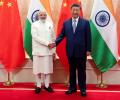
Prime Minister Narendra Modi and Chinese President Xi Jinping vowed to work towards a "fair, reasonable, and mutually acceptable" resolution of the festering boundary issue and pledged to work towards stabilising global trade.

India has voiced regret over the Ukraine conflict's 'collateral consequences', including prices of fuel, saying countries of the Global South have been left to fend for themselves, as Delhi underscored that diplomatic efforts hold the promise to end the war and bring lasting peace.

Speaking at the 'Samudra se Samruddhi' event, where he inaugurated and laid foundation stones of projects worth Rs 34,200 crore, Modi said all the problems of India have only one solution, and that is self-reliance.

Prime Minister Narendra Modi on Monday presented India's strong stance against terrorism, calling out the 'some countries' for their open support of terrorism and reaffirming that such 'double standards' are not acceptable.

In a statement after a meeting between Trump and Pakistan Army chief Asim Munir at the White House on Wednesday, the Inter-Services Public Relations -- the media wing of the Pakistan Army -- said they also discussed joint counterterrorism efforts.

A major escalation unfolded in West Asia on Monday after Iran reportedly launched multiple missiles targeting United States military installations in Qatar and Iraq, including Al Udeid Air Base in Qatar -- the largest US military installation in the region, according to a CNN report.

Pakistan plans to procure 40 jets of advanced Chinese stealth fighter J-35, which, if materialised, will mark the first export of China's latest jet. The sale would mark Beijing's first export of fifth-generation jets to a foreign ally and is expected to recalibrate regional dynamics, particularly in relation to Pakistan's rival India. The acquisition of new aircraft was pursued despite the serious economic crisis faced by Pakistan. China has helped Pakistan to jointly develop and operate the J-17 Thunder fighter jet, the mainstay of the PAF. China has delivered four advanced naval frigates to the Pakistan Navy in the last few years to enable it to play a bigger role along with its navy in the Indian Ocean and Arabian Sea.
Prime Minister Narendra Modi on Sunday conveyed to Iranian President Masoud Pezeshkian India's 'deep concern' over Iran's conflict with Israel and called for immediate de-escalation of the situation through 'dialogue and diplomacy'.

Here's a roundup of all Ranji Trophy matches played on Day 1 on Wednesday.
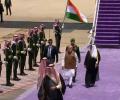
Modi and the Crown Prince will co-chair the second meeting of the Strategic Partnership Council, established during the prime minister's 2019 visit to strengthen bilateral ties.

National Security Advisor Ajit Doval stated that India-China relations have shown an "upward trend" in the past nine months, with peace prevailing along the Line of Actual Control (LAC). This statement was made during talks with Chinese Foreign Minister Wang Yi on the boundary issue, ahead of Prime Minister Modi's visit to China for the SCO summit.

Chinese Foreign Minister Wang Yi said that it is imperative for the two sides to view each other as partners and opportunities rather than rivals or threats, and invest their valuable resources in development and revitalisation.

Nandini Agasara had received a provisional berth for the World Championships in Tokyo in September by virtue of winning the heptathlete gold medal at the Asian Championships.
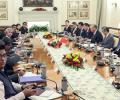
Chinese Foreign Minister Wang Yi's visit to India focuses on border talks with NSA Ajit Doval, amidst efforts to rebuild relations after the Galwan Valley clashes and rising India-US tensions.
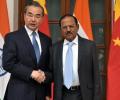
Wang also condemned the April 22 terror attack in Jammu and Kashmir's Pahalgam, which had cross-border linkages and triggered the worst fighting between India and Pakistan in years.

'While we expand into other areas, banca remains our primary channel, and we continue to be a banca-led organisation.'
The announcement on expansion of CPEC was made following a meeting among Chinese Foreign Minister Wang Yi, his Pakistani counterpart Ishaq Dar and Afghanistan's Acting Foreign Minister Amir Khan Muttaqi in Beijing, according to a Pakistani readout.
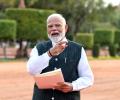
Pakistani-American businessman Sajid Tarar said like India, Pakistan also needs strong leadership to handle political instability and economic issues.
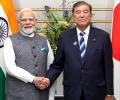
Prime Minister Shigeru Ishiba's sudden resignation after only a year in office has thrown Japan into political turmoil, raising doubts about how the country will handle economic and regional challenges, observes Dr Rajaram Panda.
Given that a sizeable part of this money is part of the coveted current accounts and savings accounts, it is surprising that banks are not in a hurry to revive these accounts, notes Tamal Bandyopdhyay.

The post further read that "at a moment of heightened regional turbulence", President Trump "demonstrated great strategic foresight and stellar statesmanship through robust diplomatic engagement with both Islamabad and New Delhi," Dawn reported.

'I hope we can move towards peace, stability, and national unity.' 'I believe most Kashmiris want that too.'
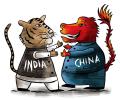
India and China have announced a series of measures aimed at improving their relationship, including maintaining peace along the border, reopening border trade, and resuming direct flights.
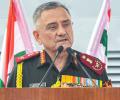
Possible convergence of interest among China, Pakistan, and Bangladesh may result in serious implications for India's stability and security dynamics, Chief of Defence Staff General Anil Chauhan said on Tuesday.
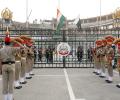
Pakistan's Foreign Office spokesperson Shafqat Ali Khan said on Friday that the ceasefire with India was holding and the country is committed to it. He also said that Pakistan is committed to making the ceasefire hold and de-escalation succeed, and then engagement to lead to stability and resolution of issues. Khan said that the two militaries have a channel of communication through the Directors General of Military Operations, through which they are working for de-escalation, in terms of the movement of troops. He added that Pakistan remains committed to the ceasefire announced on May 10 and lately, both sides have taken steps for de-escalation and return of stability.
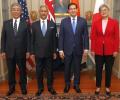
The Quad grouping has called for bringing the perpetrators, organisers and financiers of the Pahalgam terror attack to justice without any delay and urged UN member nations to extend cooperation for it.

Finance Minister Nirmala Sitharaman on Tuesday asked fintech firms to focus on risk management at a time when criminals are using AI to mimic voices, clone identities and create lifelike videos to manipulate people.

Two brothers from the Hatti tribe in Himachal Pradesh married one woman in a traditional polyandry ceremony, a practice still observed in some tribal communities to preserve land and family unity.
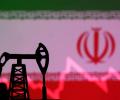
The United States has imposed sanctions on at least half a dozen Indian companies accused of trading in Iranian petroleum and petrochemicals as part of broader action targeting 20 entities worldwide.

Amit Shah seemingly encouraging AIADMK dissident Sengottaiyan after party boss Edappadi K Palaniswami had removed his one-time mentor from all party posts has not gone down well with party cadres. They are now ready to buy Team EPS' theory that the BJP and Amit Shah are out to liquidate the AIADMK, points out N Sathiya Moorthy.

Brave statements such as we will continue to be the fastest growing large country are of no consolation, because the direction of trade also determines the flow of investment, points out M Govinda Rao.
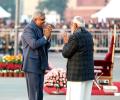
The BJP had no option but to get Jagdeep Dhankhar out of its way for the sake of the Modi government's stability, reveals Sheela Bhatt, the legendary political journalist.
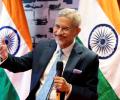
'The logic every one of our neighbours must realise is that working with India will give you benefits, and not working with India has a cost.'
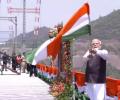
After the Chenab bridge, Modi also inaugurated India's first cable-stayed rail bridge over the river Anji. The prime minister then walked on the Chenab rail bridge holding the tricolour.

'Given China's past behaviour and their territorial claims, should we be sceptical regarding China's willingness to adhere to these agreements fully? The answer is yes.' 'As Ronald Reagan famously said in the context of the SALT talks, 'Trust, but verify!' India should also do the same.' 'This has already begun with foot patrolling, drones, satellite imagery and so on. India's military deployment did mirror China's and will continue to do so in the future.'
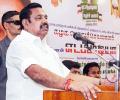
'The EPS camp feels assertiveness will help the AIADMK keep the BJP's seat-share ambitions to the minimum,' observes N Sathiya Moorthy.

Average housing prices across Mumbai Metropolitan Region (MMR), Delhi-NCR, Chennai and Pune remained stable during the January-March period compared to the previous quarter while rates appreciated 4-5 per cent in the other four major cities, according to PropTiger. Data from real estate brokerage firm PropTiger, a part of REA India that owns Housing.com, showed that prices in Bengaluru and Hyderabad grew 5 per cent each while Ahmedabad and Kolkata saw an appreciation of 4 per cent each.
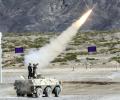
The Chinese military Thursday declined to comment on the performance of China-made weapons used by Pakistan in the recent conflict with India.
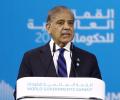
Prime Minister Shehbaz Sharif thanked US President Donald Trump for acknowledging Pakistan's role in counter-terrorism efforts after the country arrested a wanted terrorist. Trump thanked the Pakistani government for helping arrest "Mohammad Shareefullah", also known as Jafar, who supported and conducted activities on behalf of ISIS-K in support of multiple lethal attacks, including the Abbey Gate attack in 2021. Sharif said the terrorist, an Afghan national, had been apprehended in an operation along the border with Afghanistan.
